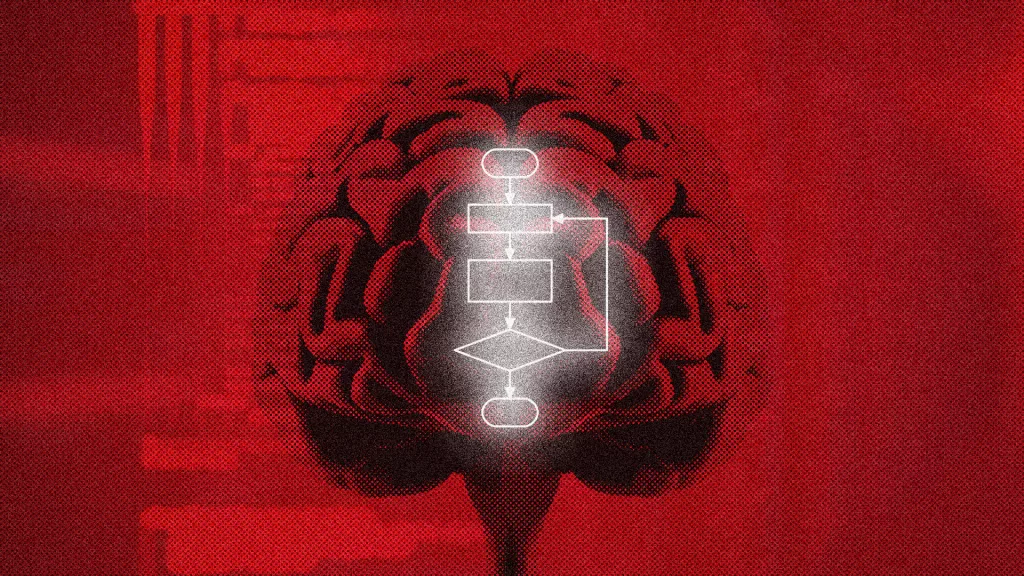
For a long time, algorithms have been seen as mere tools: lines of code that perform specific tasks, another step in process automation. They were perceived as utilitarian, without the ability to “think” or “advise.” However, the evolution of Machine Learning (ML) has radically transformed this perception. Today, we are at a point where algorithms transcend their role as simple tools to become true “digital partners” that offer invaluable insights and accompany critical decision-making at the heart of your business.
This article explores this profound evolution. We will see how artificial intelligence as a strategic partner is redefining the digital transformation of companies, offering a new form of internal digital consulting. We will highlight how these algorithms empower intelligent decision-making and act as catalysts for business innovation, leading your organization into a new era of collaboration between human intuition and algorithmic precision.
From Calculation to Insight: The Evolution of the Algorithm
To appreciate the leap forward made by algorithms, let’s look at their history. Initially, an algorithm was a sequence of steps for solving a predefined mathematical or logical problem. Over time, they became more complex in order to automate routine tasks. But the arrival of ML changed the rules of the game.
ML algorithms don’t just follow rules; they learn them from data. This allows them to:
- Identify Hidden Patterns: Uncover correlations and trends in vast data sets that would be impossible for a human to detect.
- Make Accurate Predictions: Forecast future outcomes (sales, customer turnover, machine failures) with a high degree of certainty.
- Recommend Optimal Actions: Suggest the best steps to take to achieve a specific goal (price optimization, resource allocation).
- Adapt and Improve: Continuously learn from new information, adjusting your “knowledge” and improving your performance over time.
These capabilities elevate the algorithm from a simple “calculator” to an “advisor” capable of offering strategic insight.
The Algorithm as Your “Digital Partner”: What Does It Entail?
To see an algorithm as a strategic partner is to change the mental chip. It is no longer an impenetrable black box, but one more member of the team, one that works tirelessly, processes information at speeds impossible for a human and is not subject to emotional biases.
This “digital partner” provides:
- Data-Driven Objectivity: Provides recommendations and insights purely based on data analysis, without subjectivities, personal intuitions, or human cognitive biases.
- Unlimited Scalability: You can analyze thousands, millions, or even trillions of data points, something no human team could achieve.
- Constant Monitoring: You can monitor processes, markets, and customers 24/7, detecting anomalies or significant changes the moment they occur.
- Support for Critical Decision Making: It does not make the final decision (that is still a human role), but enriches it with predictive and prescriptive information, reducing uncertainty.
- Innovation Accelerator: By automating analysis and prediction, it frees up professionals’ time to focus on creativity, strategy, and the implementation of innovative solutions.
This new relationship is at the heart of digital transformation in its most mature phase.
Practical Examples: The Human-Algorithm Alliance in Business
Let’s see how this alliance between human and algorithmic intelligence manifests itself in concrete business situations.
1. Customer Retention: The Algorithm That Alerts and the Commercial Team that Acts
The Problem: A subscription services company (e.g., telephony, streaming) was facing high churn. Identifying at-risk customers before they left was a manual and often time-consuming challenge.
The Ally Algorithm: The company implemented an ML model trained on customer behavior data (usage patterns, support history, interactions with the platform, demographics). This algorithm learns to predict the likelihood that a specific customer will unsubscribe in the next 30 days.
Synergy in action:
- The Alert Algorithm: The model continuously monitors customer activity and generates a daily list of “at-risk customers” with a churn probability score. You can even identify the key factors that contribute to the risk (e.g., “recent decrease in app usage,” “three support complaints in one month”).
- The Sales Team Takes Action: Retention agents don’t just receive a list, they have specific insights. They can intervene proactively: calling the customer, offering a personalized offer, solving an underlying issue, or simply asking how they can improve the experience.
The Result: This collaboration significantly reduces customer churn. The algorithm does not “retain” the customer; it simply alerts the team to who needs attention and why. The human ability for empathy, negotiation, and relationship building is what bridges the gap, transforming a threat into an opportunity to strengthen loyalty. It’s true smart, real-time decision-making .
Crossover with isitatech.com: This example resonates with our articles on “Customer Experience” or “Intelligent Automation in Sales”.
2. Product Development: The Algorithm That Discovers Needs and the Product Team That Creates
The Problem: Developing new products or features is costly and risky. Often, it relies on market surveys or focus groups that may not capture unspoken customer needs.
The Ally Algorithm: A Natural Language Processing (NLP) model, trained on millions of product reviews, social media comments, support call transcripts, and discussion forums. This algorithm can:
- Identify emerging trends: Detect new keywords, phrases, or topics that customers are discussing in relation to existing products or unmet needs.
- Analyze sentiment at scale: Not just whether it’s positive or negative, but what specific characteristics generate what kind of emotion.
- Compare competitors’ products: Analyze the perceived strengths and weaknesses of rival products in the market.
Synergy in action:
- The algorithm offers insights: It provides the product development team with a detailed map of what customers value, what frustrates them, and the “gaps” in the market. You can, for example, identify a recurring complaint about a device’s battery, even if customers don’t express it directly as “I want a bigger battery,” but as “my phone dies very fast.”
- The Innova Product Team: Using this data-driven digital consultancy , the team can prioritize the development of features that truly solve problems and meet latent demands, or identify untapped market niches. Human creativity, design expertise, and strategic vision are what transform these insights into tangible products.
The result: Shorter product development cycles, more successful launches, and higher customer satisfaction, all thanks to the algorithm acting as a gifted “market researcher.” This accelerates business innovation.
Cultivating the Strategic Alliance with Algorithms
For algorithms to become true strategic allies, it is essential to:
- Foster Data Literacy: Business professionals should be comfortable interpreting the results of models and understanding their limitations. They don’t need to be data scientists, but they do need to be “competent readers” of AI information.
- Set a Clear Purpose: Each algorithm should have a specific business goal to solve and its impact should be measurable.
- Build Trust Progressively: Start with low-risk pilot projects, demonstrating the value of the algorithm with tangible successes. Trust is earned with time and evidence.
- Promote Multidisciplinary Collaboration: Create bridges between business teams and AI specialists (or no-code ML tools). Constant dialogue is crucial to ensure that AI is solving the right problems.
- Adopt an “Augmentation” Mindset: View AI not as a replacement, but as an extension of human capabilities, allowing us to focus on higher-value tasks, creativity, and ethical decision-making.
Crossover with isitatech.com: These points relate to articles on “The Future of Consulting” and the “Evolution of Professional Skills.”
The Future is Hybrid: Humans and Algorithms Together
The future of work and the digital transformation of companies does not involve choosing between humans or algorithms. It involves integrating them. When the algorithm ceases to be a mere tool and becomes a strategic ally, a “digital partner” that offers valuable insights and accompanies critical decision-making, the potential for innovation and growth skyrockets.
This synergy between human intuition and judgment, on the one hand, and ML’s ability to analyze and predict, on the other, is what will define tomorrow’s leading companies. It’s time to welcome the algorithm not just as a resource, but as an invaluable member of your team, ready to propel your business into a smarter, more strategic future.
Train and Empower with Isita Tech. At Isita Tech, we believe in the democratization of ML. We implement intuitive tools and train your team to make artificial intelligence a daily ally, improving its capabilities without the need to be experts.